Ingredients
Equipment
Method
Step‑by‑Step Instructions
- Fill a small pot with enough water to fully submerge the eggs and bring it to a rolling boil over medium-high heat. Once boiling, gently add the large eggs and cover the pot. Set a timer for 7 minutes for jammy eggs.
- Prepare a bowl of ice water for the ice bath. Once the timer rings, carefully transfer the eggs into the ice bath using a slotted spoon, ensuring they cool completely for about 5 minutes before peeling.
- In a mixing bowl, combine the gochujang, soy sauce, sugar, rice vinegar, and chicken stock (or water). Whisk everything together until smooth and vibrant.
- Heat a skillet over medium-high heat and add a drizzle of neutral oil. Add minced garlic and sauté for about 15 seconds until fragrant.
- Pour the gochujang mixture into the skillet with garlic. Allow it to simmer over medium heat, stirring frequently for 3-5 minutes until slightly thickened.
- Once the sauce has thickened, add the peeled eggs to the skillet. Rotate them gently in the sauce, cooking for an additional 3 minutes.
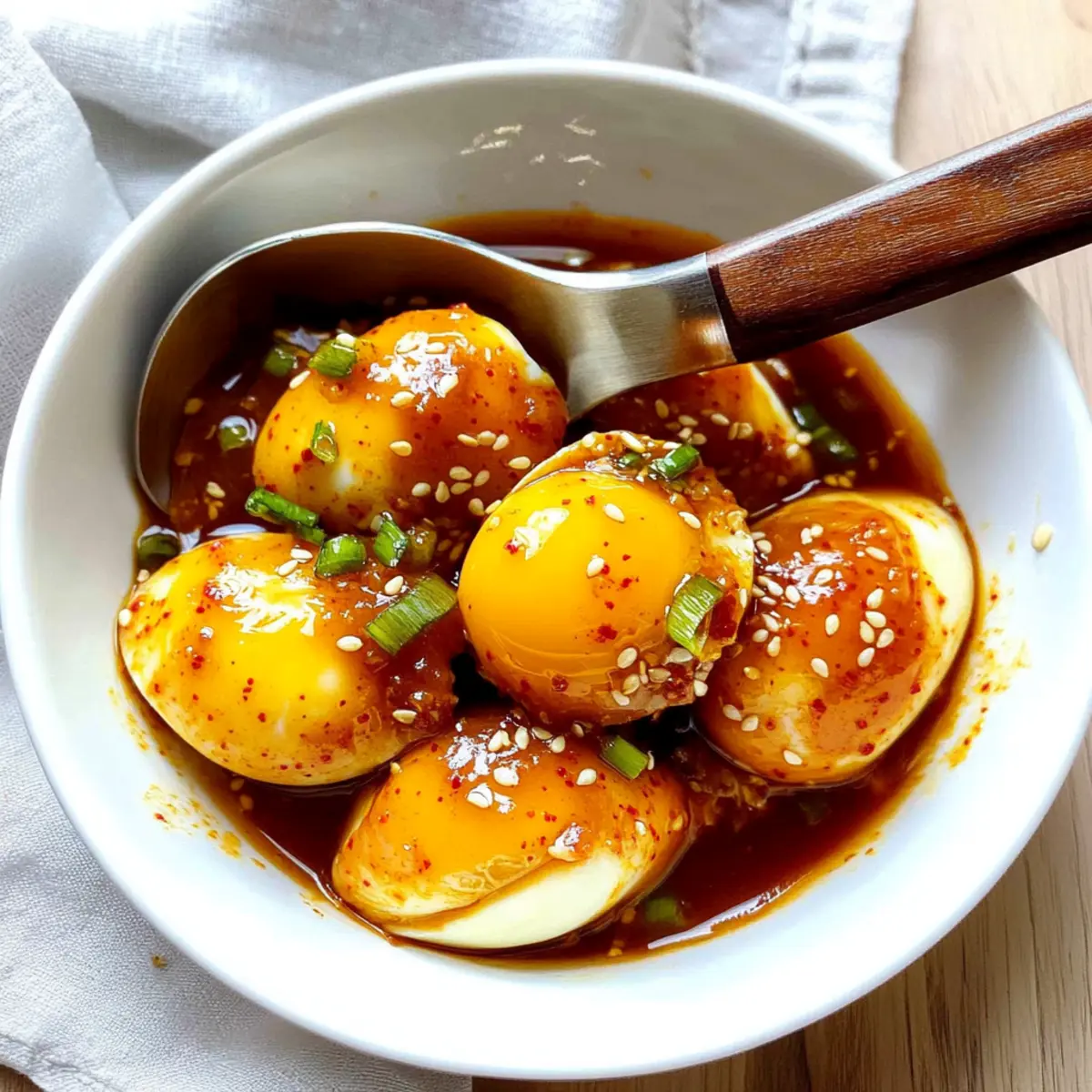
- Transfer the eggs onto a serving plate. Drizzle the remaining sauce over them and garnish with sliced scallions and toasted sesame seeds. Serve with rice or pickled vegetables.
Nutrition
Notes
Store leftovers in an airtight container in the fridge for up to 5 days. For freezing, keep the sauce separate from the eggs in a freezer-safe container for up to 3 months.